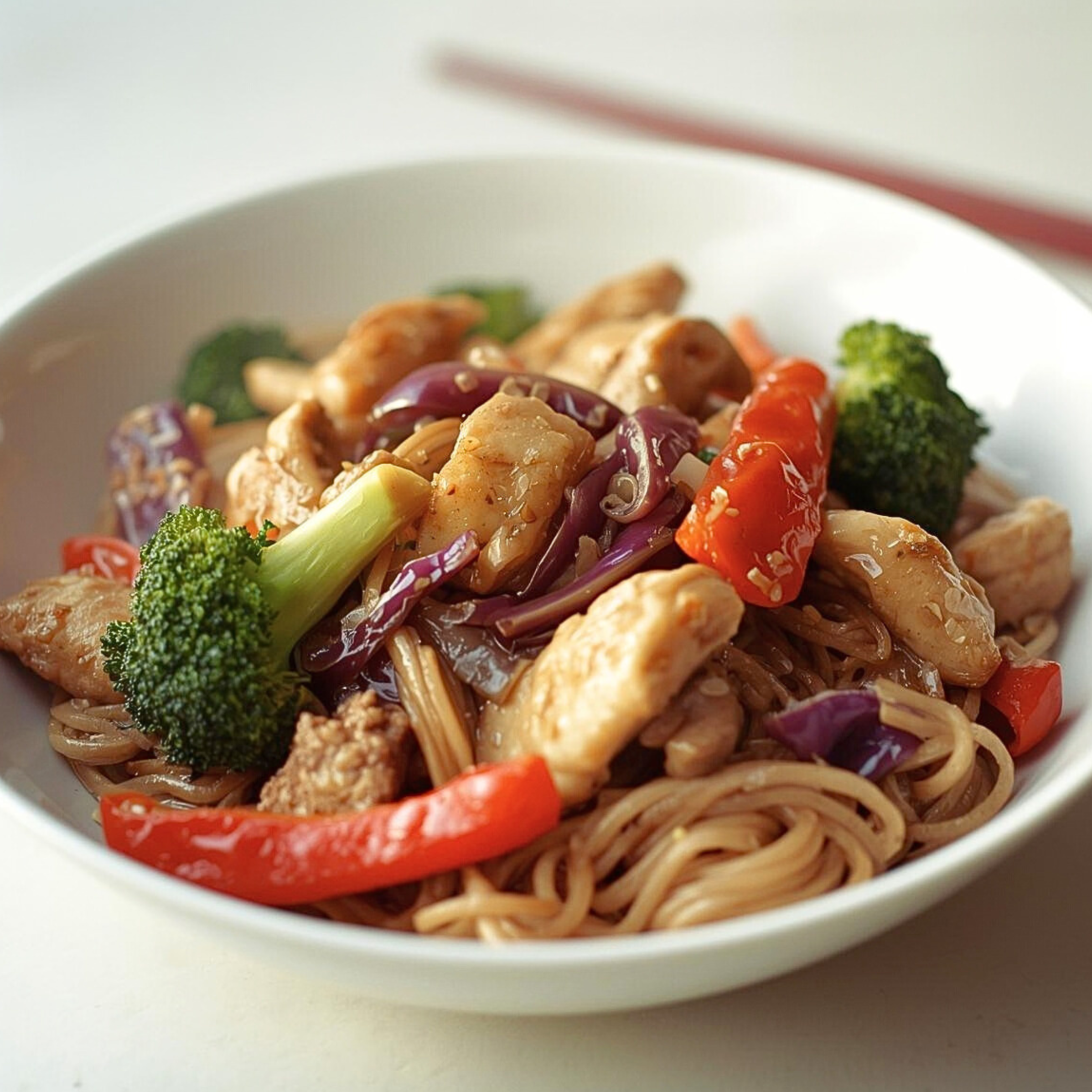
Cholesterol-lowering rainbow chicken & vegetable stir-fry (easy dinner idea)
Guess what? If your doctor mentioned “watch your cholesterol”, you don’t need to panic about food having to be bland, boring and restrictive. And, this rainbow chicken stir-fry proves it doesn’t have to be that way.
With lean chicken, a generous variety of colourful vegetables and heart-healthy fats from sesame oil and extra virgin olive oil, this meal is naturally rich in fibre, antioxidants and unsaturated fats, all of which are key players in supporting heart health and reducing cholesterol. We strategically mixed eight different plant foods in this recipe to boost plant diversity, which matters for both heart and gut health. Serving it with brown rice or soba noodles adds whole grains and additional fibre, helping create a satisfying and balanced meal.
It’s vibrant, filling and genuinely enjoyable, because heart health isn’t about bland food. It’s about building meals that both taste good and nourish your body long term.
Ingredients
Serves 4
500-750g chicken breast, sliced
2 carrots
1 head of broccoli, cut into florets
150g sugar snap peas or snow peas
1 red capsicum, cut into thin strips
1 green capsicum, cut into thin strips
¼ small purple cabbage, chopped
Handful of mushrooms
Brown rice or soba noodles to serve
For the sauce
½ cup of chicken stock or broth (low-sodium is preferable)
½ cup of soy sauce OR tamari
2 tablespoons of honey
2 teaspoons of sesame oil
2 teaspoons of apple cider vinegar
2 tablespoons of cornflour or arrowroot powder
Method:
In a large bowl, combine sauce ingredients with a whisk and set aside.
In a large wok, on medium to high heat, add 1 tablespoon of extra virgin olive oil. Add chicken in a flat layer and cook in batches until cooked through and gold in colour. Set aside in a bowl.
Add an additional 1 tablespoon of extra virgin olive oil.
Add broccoli and carrots. Stir-fry for 2 minutes.
Add snow peas, capsicum, cabbage and mushrooms. Stir-fry for another 2 minutes.
Return chicken to wok and toss in sauces.
Serve with your choice of brown rice or soba noodles.
LOVED THIS RECIPE? THEN YOU WILL ENJOY THIS…
THE MEDITERRANEAN DIET EBOOK: BEGINNER'S GUIDE TO EATING MORE MEDITERRANEAN
Your one-stop guide to eating more Mediterranean. This ebook will leave you confident in taking the principles of the Med Diet and whisking, stirring, simmering them into meals that truly taste delicious.
Over 20 Dietitian-curated drool-worthy recipes, covering breakfast, lunch, dinner, dressings and snacks. Plus, a practical snack product guide with everyday eating tips and a weekly challenge list to tick off.
Like a cookbook but with a twist. Because each recipe, tip and suggestion is Dietitian-approved and tested.
HUNGRY FOR MORE? CHECK OUT OUR LIBRARY OF ARTICLES AND RECIPES WRITTEN BY OUR DIETITIANS:
Trying to lower your cholesterol but worried it means it’ll be just bland food here on out? This colourful chicken and vegetable stir-fry is rich in fibre, antioxidants and heart-supportive ingredients. A simple, satisfying dinner that actually tastes good.
Impulse eating and binge eating are more common in adults with ADHD than many people realise. Not because of willpower, but because ADHD affects dopamine, reward and impulse control. In this blog we unpack why it happens and practical strategies that can help you feel more in control around food.
Trying to manage insulin resistance or type 2 diabetes without living on salads? This high-protein zucchini slice is balanced for blood sugar, packed with fibre and easy to prep ahead. A diabetes-friendly lunch or snack that supports steady energy, keeps you fuller for longer and actually tastes good. No extremes, just smart, sustainable nutrition.
Bloating, constipation, reflux or nausea on Ozempic, Wegovy or Mounjaro? GLP-1 medications can slow and disrupt digestion, which explains those uncomfortable gut side effects. Here’s what’s happening in your body and how to support your digestion.
“IBS-friendly” doesn’t have to mean cutting everything out. These savoury veggie muffins use a gentle fibre approach to support digestion while still being filling, nourishing and satisfying. A practical, non-restrictive recipe for managing IBS symptoms without turning food into a rule book.
Calorie counting has it’s place (sometimes). But if you’re trying to heal your relationship with food, it can often do more harm than good. Let’s unpack what actually matters more than calories and three gentle, evidence-based strategies we use to support sustainable health (sans restriction, guilt or tracking).
Say hello to an IBS-friendly one pot risoni bolognese that supports gut comfort without restrictive diets. Our dietitian-approved recipe uses gentle fibre strategies to help reduce bloating and digestive discomfort, while still giving you all the flavour, fibre and satisfaction you deserve when navigating IBS.
Have you started Ozempic, Wegovy or Mounjaro for insulin resistance? We know it can feel equal parts hopeful and confusing. Appetite feels different, hunger cues change, meals feel “heavier” and food suddenly feels quieter and less appealing. If you’re wondering “what am I actually meant to eat now?”, this blog will help unpack what’s actually happening, why nutrition is still important and how to approach food in a way that supports insulin resistance without falling into restriction, food rules or guilt.
If you’ve been on TikTok and insta lately, you’ve definitely seen “fibremaxxing” trending. And if you live with PCOS, fibre isn’t just a wellness buzzword. It’s an underrated tool for blood sugar control, gut health and hormones. The catch? Going from zero to hero with fibre can leave you bloated and uncomfortable. So, here’s what fibre does for PCOS, why it matters and how to hit that sweet spot between not enough and way too much.
If you’re living with POTS, that post-meal dizziness isn’t in your head, it’s a real physiological reaction. Thankfully, simple nutrition tweaks can actually make a difference. It’s all about understanding how food affects blood flow and fluid balance. Here are our top four strategies to ease those dizzy spells and feel more in control after eating.
Yes, water is essential. But between life admin, back-to-back meetings and chasing kids and/or career goals, it’s normal to forget to drink enough. You might not feel parched, but mild dehydration sneaks up in surprisingly subtle ways. Here’s four science-backed signs you might need more fluids and some practical hydration tips that don’t involve chugging litres of plain water (unless that’s your thing, no judgment).
Turns out, being strategic with your protein when you have ADHD can support attention, mood and emotional regulation throughout the day. Here’s everything you need to know about structuring meals and snacks, how much protein you need and easy high-protein food swaps.
This easy creamy silken tofu chocolate mousse is dairy-free and rich in polyphenols and fibre, perfect for a gut-loving, feel-good dessert (with no sacrifice on taste). Discover how cacao and dark chocolate support gut health without compromising indulgence.
Gut health plays a powerful role in managing endometriosis symptoms, especially through its impact on oestrogen levels, inflammation and digestion. The good news? It’s about adding in foods, not an extreme or restrictive diet. Here’s what the science says about the gut-endometriosis connection.
Have you been told to "just cut out salt" to lower your blood pressure, but feel like that is overwhelming and well… restrictive? Or, wish there was more to it than just avoiding salt? You're not alone. But here’s the good news: it is not just about what you take away, it’s also about what you add in. Foods rich in potassium, magnesium, calcium, nitrates and fibre can actively lower blood pressure. Read on to learn how and what foods you can focus on “crowding in”.